Write Your Own Career Story With an HHL Corporate Finance MBA
This article was originally published by Paula Werdnik via mbagradschools.com on May 4, 2026.
Founded in 1898, HHL is one of the top business schools in Germany. Our main campus is located in Leipzig. HHL is the first private German business school to be AACSB accredited. With over 57 nationalities on campus and 140 partner universities, we offer a truly dynamic and internationally oriented learning environment.
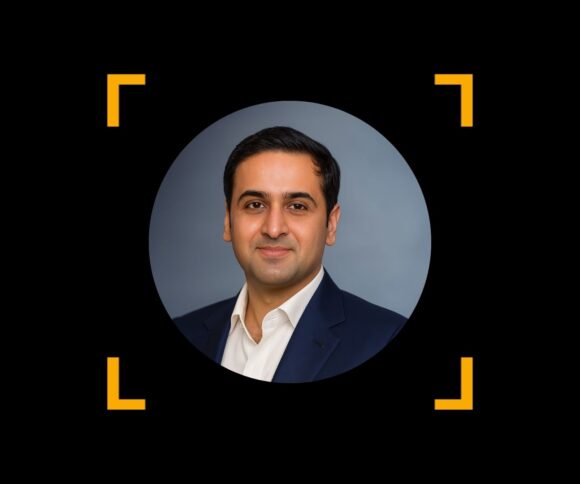
In a recent interview with MBAGRADSCHOOLS, Nikhil Agarwal, our Full-time MBA student from India, shared his student experience. He explained how his extensive work experience prepared him for an MBA with a specialization in corporate finance and why HHL was the right choice for taking the next step in his career. His story shows how a Corporate Finance MBA can help professionals connect previous experience with new career opportunities in finance.
From the Engine Room to the Boardroom
Nikhil’s motivation to pursue an MBA with a focus on finance stemmed directly from his previous work experience. Having worked in marine engineering at Anglo-Eastern Ship Management in Hong Kong, he realized that optimal decision-making in his industry demanded a greater synergy with finance. For professionals considering a career switch to finance, this is often the moment when an MBA becomes a bridge between practical experience and formal financial expertise.
He notes, “Many cost-critical decisions, especially around fuel efficiency, were being made without strong financial visibility. That made me realize the importance of combining operational insight with financial decision-making.”
Nikhil decided to jump ship to entrepreneurship. He made a career pivot from marine engineering to co-founding a venture. This was the start of Laxmi Enterprises. Running his own venture gave him a crash course on finance. He had to take direct ownership of budgeting, pricing, and cash flow management. He gained hands-on exposure to how financial decisions drive profitability and growth.
But the experience made him realize that he wanted to learn more about finance. He wanted to formalize this learning with further study and later transition into roles in mergers and acquisitions (M&A) and investment analysis.
Nikhil chose to undertake the Full-time MBA with a specialization in corporate finance. In this program, he is gaining key foundational skills in valuation, strategy, and deal-making.

Want to discover more about our top tier and innovative MBA programs?
Dive deeper into the program structure, learn more about career development and networking at HHL.
The Crossover From Engineering Into Finance
Despite not having a traditional background in finance, Nikhil’s engineering training and diverse previous work experience are a competitive advantage in the HHL classroom.
He reflects, “My engineering background has given me a structured and problem-solving approach to finance. I tend to break [down] complex problems into smaller components and rely heavily on data for making decisions.”
In M&A and venture capital (VC) contexts, this translates into more rigorous financial modeling and systematic thinking. Nikhil examines synergies, strategic fit, and long-term sustainability.
It is this kind of discipline and analytical approach that sets professionals with tech backgrounds apart in the business world.
Startup School: The Key Lessons From Co-Founding a Venture
Long before enrolling at HHL, Nikhil was already honing his finance instincts through firsthand experience. Being a co-founder of a business venture, he was exposed to real-world finance and business challenges.
He states, “One key lesson was the importance of cash flow management and working capital optimization. Even profitable operations can struggle without liquidity planning.”
He learned to implement forecasting frameworks and cost control systems that improved margins and reduced inefficiencies.
He adds, “It gave me a practical foundation that directly complements the MBA curriculum… in my class, I’m not just learning theory. I can relate it to the real decisions that I have made. It allows me to contribute more meaningfully to discussions and projects in my class.”
When Nikhil arrived at HHL, the cutting-edge MBA curriculum was not just an abstract theoretical framework. It gave him the formal vocabulary and know-how he needed for the day-to-day challenges he met in his industry.
Moreover, first-hand insights from his work experience are a valuable addition to the classroom that his peers can learn from.
More articles about studying an MBA



Competing at the Highest Level in Finance and Venture Capital
Some highlights of Nikhil’s time at HHL have been his participation in two elite case competitions. He was a finalist in both the Global Case Competition at Harvard and the HHL Venture Capital Club’s Investment Cup.
He shares, “These competitions taught me how to evaluate deals in a structured and investment-oriented way. In the M&A challenge, I worked on a US$7 million Ferrari deal where I focused on valuation, synergies, and integration strategy. In the VC competition, I evaluated a startup using unit economics, customer lifetime value, customer acquisition cost, and the VC method.”
In the Investment Cup competition, he created a full investment thesis and term sheet under time pressure, in front of the jury. Through these competitions, he built confidence and practical competence that complemented his classroom learning. He says, “Case competitions and classroom [learning] are both very important for one’s growth.”
Our MBA is built around this balance. The classroom provides frameworks and theoretical grounding. On the other hand, case competitions push you to apply your learning in real-time. You need to rely on your skills and knowledge to devise solutions with limited time and incomplete information.
The result is a graduate who knows how to think clearly and move decisively under pressure.
[The HHL Full-time MBA] has given me a very adaptable and global mindset.
Hands-On Finance Learning While Studying
During his studies, Nikhil worked as a Student Consultant at ICCAS (Innovation Center for Computer Assisted Surgery) in Leipzig. He led financial modeling and revenue forecasting for a therapy decision support software. Additionally, he conducted market and competitor analysis in the EU MedTech landscape. He identified monetization opportunities and strategic partnerships for value creation.
He notes, “This experience taught me how to connect financial analysis with business strategies, ensuring the models are not only ethically sound but also aligned with market realities.”
This is exactly the kind of practical exposure the MBA is designed to enable. Real-world exposure is integrated directly into the program curriculum. This ensures that students apply their learning in live business settings and make valuable industry connections.
A Global Mindset Built Across Three Worlds
Overall, Nikhil has had a winding and unique career path. He worked aboard ships across 28 different countries, founded his own startup venture, and is now pursuing his MBA degree.
His time in marine engineering taught him how to collaborate under pressure. His entrepreneurial venture taught him about ownership and decision-making. Now, his MBA at HHL is teaching him the importance of a strategic and financial perspective. He says about his work experience: “[it] has given me a very adaptable and global mindset.”
HHL actively cultivates this mindset in its MBA graduates. The Full-time MBA has 97% international students and small class sizes of 35 – 45 students. The average MBA candidate brings eight years of work experience to the table. The diversity of cultures and industries in the classroom fosters rich discussions and peer learning. The program is designed for globally minded professionals who later become part of an expansive and supportive global HHL alumni network for life.
Leipzig itself adds to that environment, offering a vibrant city life without the high living costs of other European capitals.
Check out the latest employment stats of HHL’s MBA graduates in our latest employment report. Download it for free!
Building a Career at the Frontier of Finance and Tech
Nikhil feels sure about his career path after our MBA. He hopes to go into corporate finance in M&A, private equity, or venture capital. He is excited about working at the cross-section of finance, technology, and innovation.
Our MBA’s strong focus on finance supports his desired career pivot and accelerates the career opportunities available to him after graduation. He plans to leverage his previous experience alongside his new MBA to achieve his long-term goals.
Nikhil’s journey is a powerful example of how the MBA can open new doors for driven, multidisciplinary professionals. If you are ready to redirect your career, expand your skillset, and build a global network in the heart of Europe, the Full-time MBA may be your next defining step.

Hello there, I'm Ellen and international education and student mobility is my thing! I did my first language course in the UK at the age of 14 and I have been an exchange student in Denmark at university. I have lived in Malta and Ireland for 15 years to work with international students and support them on their individual and exciting journeys to improve their education. I joined the HHL community in 2021 as a program consultant for the full-time MBA program and I am very much looking forward to accompanying you on your next steps of this life-changing journey. Any questions about the full-time MBA program? Let's have a chat!