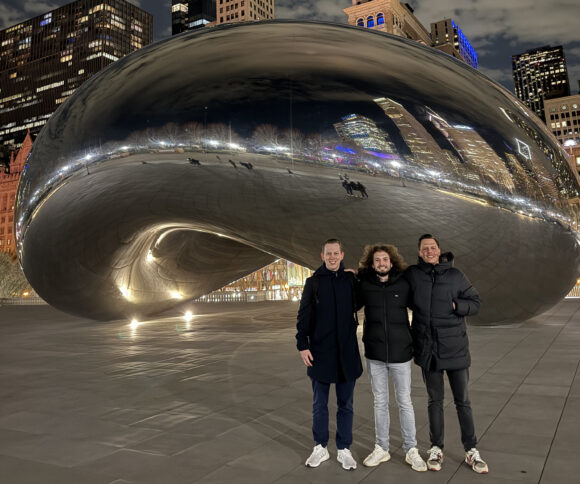
Balancing Booth, Books and the Bean – My Part-time Study Abroad Semester in the US
World-class professors, unforgettable campus moments, and a community that instantly felt like a source of inspiration – these were just some of the highlights that defined Richard’s semester abroad in the US.
As a Part-time Master in Management graduate from HHL Leipzig Graduate School of Management, Richard took an unconventional path: While working full-time and studying part-time, he managed to squeeze in an exchange semester at Chicago Booth.
How does a part-time student navigate an experience that most consider a full-time luxury? What does life at one of the world’s most prestigious business schools really feel like? And what lessons stay with you long after the last class ends?
Here’s his story and his most memorable takeaways.
Why an Exchange Semester in the US and Why Chicago Booth?
I had previously worked abroad for my employer, and those experiences abroad changed my outlook completely. Learning from different work cultures, adapting to new environments, and meeting people from all over the world was something I wanted to repeat, this time in an academic setting.
Before I even started at HHL, I knew I wanted to do an exchange semester. One of the reasons I chose HHL was its strong international network of partner universities. Studying in the US had always been a dream of mine, but doing a full degree there simply wasn’t feasible neither timewise nor financially. Combining a part-time master at HHL with a semester abroad, however, was the perfect way to make it happen.
I chose Chicago Booth for three main reasons. First, the reputation, Booth is one of the world’s most respected business schools and the opportunity to study there was simply unique. Second, I wanted to experience a new city, I had never been to Chicago before and was curious about its mix of architecture, culture, and lakefront life. And finally, the academic quarter system at Booth made the stay more manageable in length, around three months, which fit well alongside my professional responsibilities. For me, that balance was ideal.
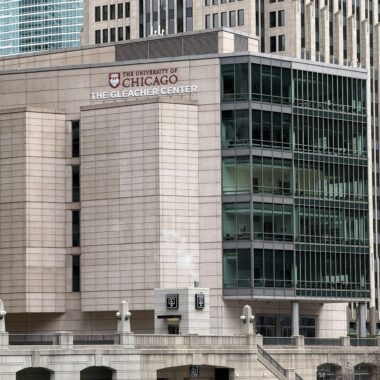

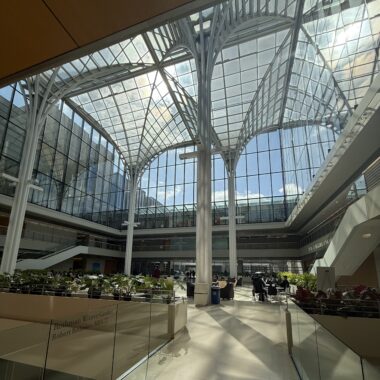
Planning and Preparation for a Study Abroad Semester
If you’re studying part-time, my biggest piece of advice is to talk to your employer early. The earlier you raise the topic, the easier it will be to find a workable arrangement.
About nine months before departure, I received the email from HHL confirming my first-choice university: Chicago Booth. It was an incredible feeling. Once Booth officially confirmed the nomination a few months later, the excitement really began.
From there, it was a mix of practical steps: J1 visa application, embassy appointment, health insurance, flights, and accommodation. Booth provided excellent information materials and my contact in Chicago was quick and helpful whenever questions came up. I chose an Airbnb for my stay, but many students sublet their apartments through the Booth network, which can be a great option.
A big thank-you also goes to Julia and the International Relations Team at HHL, who made the process seamless. Having a supportive home university behind you really makes a difference.
Choosing Courses at Chicago Booth and Understanding the Bidding System
One of the most exciting parts of the preparation was selecting courses. At Booth, course registration works through a bidding system. Each student receives 10,000 bid points, which they can use to “bid” for courses. Popular courses tend to require more points, while others may be easier to get into or even free if they don’t fill all their seats.
It sounds complicated at first, but it’s actually very fair. The school even provides a list of historical bid results to help with strategy.
I wanted to combine my two main interests, healthcare and finance, and ended up with four great classes:
- Health Economics
- Debt, Distress, and Restructuring
- Health-Tech Strategy
- Institutional Private Capital Investing
The quality of teaching was exceptional, and the professors made (almost) every class engaging and applicable.
During my time there, I also asked many students about their favourite courses and a few names came up again and again: Entrepreneurial Finance and Private Equity (with Steven Neil Kaplan), Pricing Strategy (with Jean-Pierre Dubé), Cases in Financial Management (with Laura Born), Entrepreneurship through Acquisition, Strategies and Processes of Negotiation, Portfolio Management, and Interpersonal Dynamics.
The course selection at Booth is enormous, so I’m sure everyone will find something that fits their interests. One small tip: don’t just look at the course title, pay attention to the professor as well. Some courses are offered by different instructors, and their teaching styles, focus areas, and expectations can vary quite a bit.
Read more about our students’ abroad experiences



First Impressions: Campus, City, and Culture
Booth thrives on its outstanding professors and highly motivated students. In that sense, it reminded me of HHL, just on a larger scale.
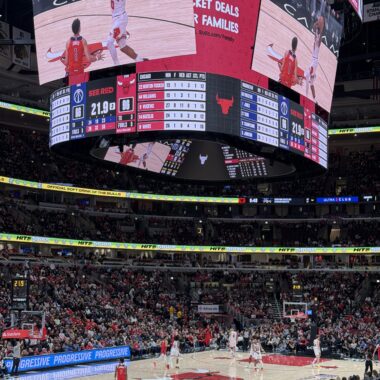
Studying in the US is a special experience. The atmosphere on campus is vibrant, with guest lectures, club events, and networking sessions happening almost daily. Outside the classroom, the activities were endless. From 1920s-themed parties on Lake Michigan to sports events and weekend trips.

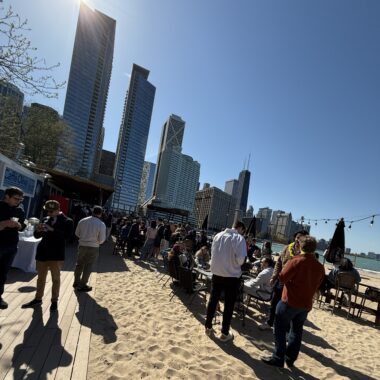


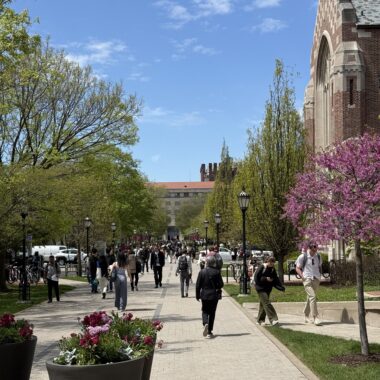
What stood out most was the openness of the people. Fellow students were incredibly welcoming, and professors often stayed after class for casual conversations. That sense of accessibility creates a unique learning culture.
And the city? Chicago really surprised me. With its lakefront beaches, beautiful parks, and lively neighbourhoods, it’s a great place to live and study. The food scene alone deserves its own article, my list of restaurant recommendations would probably be long enough to fill one. The only minor downside: the weather definitely lives up to the nickname “The Windy City.”
Studying at Chicago Booth vs. HHL
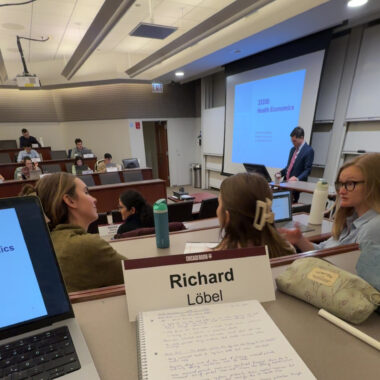
One of the main differences I noticed was the level of continuous assessment. At Booth, grades come from weekly assignments, midterms, final exams, and group projects. It’s intense, but it keeps you constantly engaged with the material. And if you didn’t have good time-management skills before, you’ll definitely develop them here.
Each course consists of two 90-minute classroom sessions per week, plus an additional 3 to 10 hours of preparation and follow-up work, depending on the topic and professor. In the list of historical bids mentioned earlier, students even provide average workload estimates for every course, and they’re very accurate.
Courses are highly interactive and often case-based, with professors frequently integrating current market developments and business cases.


Life Beyond the Classroom
An exchange semester is much more than the classes you attend. For me, some of the most valuable moments came outside the lecture hall: meeting new people, exploring the city, and experiencing American campus life.
The combination of international students, inspiring professors, and countless extracurricular opportunities created a truly engaging environment. From casual coffees between classes to networking events and spontaneous dinners, those informal moments often became the most memorable ones.
Combining an Exchange Semester with a Full-Time Job
Now to the big question most part-time students have: “This all sounds great – but how do you do that with a full-time job?” Short answer: you need a plan. And you need a company that’s at least somewhat interested in your development. Here are a few options that I’ve seen work (for myself and others):
Mythbusting: Chicago Booth Edition
Myth 1: Chicago is very dangerous.
Not really. Like any big city, there are areas you might want to avoid, but I always felt safe. The Hyde Park campus has strong security, a reliable shuttle service to downtown, and even a late-night taxi service to nearby train stations.
Myth 2: Booth is only for finance people.
Far from it. While Booth’s finance faculty is world-class, the course selection spans everything from entrepreneurship to negotiation, strategy, and technology.
Myth 3: Exchange students are outsiders.
Not at all. Booth is extremely international, and since there are no fixed classes, everyone is open to meeting new people each quarter. It’s easy to make connections if you’re proactive.
Learnings and Takeaways From Studying Abroad
The semester at Booth has shaped me both personally and professionally. I gained deeper insights into finance and healthcare, strengthened my analytical and communication skills, and built an international network.
More importantly, I learned how to manage my time and priorities even better, to adapt quickly, and to find confidence in unfamiliar settings. It’s an experience that not only enriches your studies but broadens your view of what’s possible.



Final Thoughts: Why Studying Abroad as a Part-time Studen is Worth it
Looking back, my time at Chicago Booth was one of the most rewarding experiences of my entire master’s program. Whether you go to the US, Asia, or somewhere else, take the opportunity to go abroad if you can. You’ll return with new ideas, friendships, and memories that stay with you for life.
I can recommend Chicago and the university without hesitation. If you have questions about the exchange, life in Chicago, or how to manage it alongside work, feel free to reach out. I’m happy to share my experience.