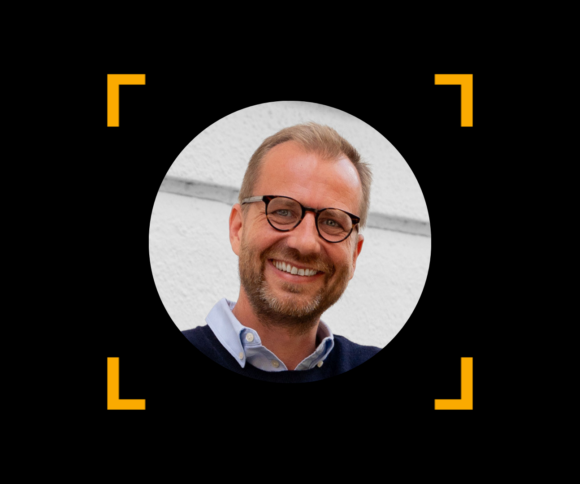
From Business School to Startup: How Leadwunder Became a Sustainable Business
Some journeys don’t follow a straight line. They evolve through ambition, setbacks and the right decisions at the right time. For Sebastian Hettlage, the foundation was laid during his studies at HHL, but what followed was shaped by experience and reflection. His story shows how a business school experience can shape an entrepreneurial mindset and prepare founders for building a sustainable business. Read on to learn how his time at HHL laid the foundation for his entrepreneurial journey.
Study Experience at HHL: The Foundation of an Entrepreneurial Mindset
Sebastian remembers his time at HHL less in courses and more in energy. “I completed the Diploma Program (K15) at HHL, with a focus on Entrepreneurship and Marketing,” he says. When he looks back, what stands out are not exam phases or grades, but long evenings that turned into early mornings.
“When I look back at my time there, the first thing that comes to mind is a lot of late nights. Not because we had to, but because we wanted to. We stayed up working on projects because it was genuinely fun to build things together. We had energy, ambition, and a shared commitment to really deliver,” Sebastian recalls.
Those nights weren’t accidental. They were the result of a shift. Coming from a large public university, he suddenly found himself in a small, ambitious cohort. “I sat there and thought: okay, I need to step up. I don’t want to lose touch here,” he says. Instead of pressure, it created momentum. “You saw what others were capable of. You looked left and right and thought: I want that too,” he adds.
One project in particular captures that time. “I can still tell you exactly who was in that team: Franz Albert, Richard Schröder and Simon Strauch. We were all in a similar situation and said: this will be our project. Let’s show what we can do,” he remembers. They worked late at HHL, continued discussions at someone’s apartment, ordered pizza, refined slides and arguments until everything was sharp. “We wanted to deliver great stuff. And we did,” he says. “This intensity stayed with me. It shaped me.”
HHL sent me out with a very clear mindset: analytically strong, structured, entrepreneurial and well prepared for either consulting or corporate roles.
Building Structure and Professional Standards for Entrepreneurship
Beyond ambition, HHL gave him something more fundamental: structure. “We learned how to structure ideas, present them convincingly, and stand up for them. That ability to present yourself and your thinking was a huge learning curve. Looking back, it was perfect preparation for consulting,” he explains. At the same time, these skills form the foundation for building a business, where structured thinking and clear communication are essential for founders.
He describes the early lessons almost methodically. “First of all, I got the toolkit. I learned how a slide is built, how to write an action title, how to structure it. That was demonstrated in every lecture,” Sebastian says. Slides weren’t decoration. They were thinking made visible.
“There were people who did it excellently. One professor completely ignored the slide rules, just images and pulled everyone in with his presentation skills. People were hanging on his lips,” he recalls. Structure was essential. But so was presence. “Craftsmanship is important. You need it. But the really good ones leave the structure again and guide you freely through the topic.”
He never experienced dramatic failure during his studies. “I honestly never had the feeling that I failed. It was never about putting someone down. It was about constantly refining,” he reflects. That culture of refinement carried directly into consulting. “No hand-waving, only solid arguments,” he says. “HHL sent me out with a very clear mindset: analytically strong, structured, entrepreneurial and well prepared for either consulting or corporate roles.”
First Startup: Key Lessons
Entrepreneurship had always been part of his thinking. The first attempt came after consulting. “Before Leadwunder, I founded a company together with a friend. We built a virtual ‘surprise capsule’ filled with e-commerce special offers. The concept was very well received. Users loved the playful element,” Sebastian explains. “We felt like kings. We thought the world was ours,” he adds.
But scaling required more than conviction. “What we underestimated was how much traffic and especially how much investment would have been necessary to scale the model sustainably.” They pitched investors, refined their approach and continued working.
“At some point the question marks start. How do you want to continue if you can’t convince anyone?” he says. After more than two years, a decision became necessary. “When you lose focus and can’t dedicate 100% anymore, you have to make a decision.”
Looking back, he summarizes the central learning clearly: “If you’re building a tech startup and you’re not a techie yourself, you either need a very strong technical co-founder or significant funding. We didn’t have either to the extent required.” “Failure makes you clearer. And more honest with yourself,” he reflects.



Founding Leadwunder
Leadwunder began differently.
“The idea emerged from a consulting project. Suddenly, I had found my topic, one where I felt I was ahead of the curve, not chasing it,” Sebastian says. This time, he defined the framework from the outset. “I asked myself from the beginning: who do I need? Can I do it alone? Do I need capital? And I decided: the business has to be cashflow-positive from day one.”
“We may not grow in a hockey-stick way like unicorns. But we grow sustainably, at a pace that fits me and that I can control,” he explains. He describes the company along two pillars. “One is the product and the quality of our consulting. The other is the team.”
“I need people who want to build something. Who want to go the extra mile. Who are allowed to make mistakes,” he says. “It’s not about size. It’s about quality.”
The Value of the HHL Network
Over time, the HHL network has become increasingly important. “It’s a real success factor. A huge asset,” Sebastian says. For many founders, networks built during business school become a critical driver of opportunities, partnerships, and growth.
Former classmates now hold senior positions across industries. “You can have the best product. If nobody opens the door for you, you’ll fail.”
He remains closely connected to the school. “HHL prepared me exceptionally well, both professionally and personally. I owe the school a lot. And when you’ve received a lot, you should give something back,” he concludes.

The Master in Entrepreneurship at HHL supports aspiring founders with hands-on learning, an active startup ecosystem and a strong entrepreneurial network.
Download the brochure to explore the program and start your own entrepreneurial journey!
Advice for Current Students and Future Founders
For anyone starting their own entrepreneurial journey, these lessons offer practical guidance for building and scaling a business.
Looking back, the central principles are clear. “Be confident. Leverage your network intensively. Don’t surround yourself with yes-people, take critical voices seriously. Make decisions quickly. Try to keep emotions out of strategic decisions,” he advises.
And ultimately: “Trial and error. Execution beats perfection.” The late nights in Leipzig built standards that still define how Sebastian works today.

Hi, I'm Pauline, HHL's Social Media Manager! My job is basically telling stories all day: student journeys, alumni wins, campus moments you'd otherwise miss. Some days that means filming a reel, other days it's writing a blog post or just chatting with people in our comments. Got a story you think we should feature? Don't be shy, just message me. I'd love to hear it and help bring it to life.